Myth vs. data
Farmed vs. wild salmon
Almost everything you've heard about this is a little bit off — in both directions. Here's what the government monitoring data actually shows.
"Wild salmon has more omega-3s than farmed."
Not per serving. Farmed Atlantic salmon carries more EPA+DHA than wild — 1.83 g vs 1.57 g per 3 oz — because it's a fattier fish and the omega-3s ride in the fat. On raw omega-3 grams, farmed wins.
But here's what actually changed
Farmed salmon's omega-3 content has fallen by roughly half since 2006. Salmon feed shifted from fish oil to plant oils, and the omega-3s went with it — Norwegian government monitoring of nearly 7,000 fillets tracked the decline. So farmed still beats wild today, but it's a weaker fish than it was, and the trend is the wrong direction.
What wild actually wins on
Not total omega-3s — two other things.
- Better omega-6 to omega-3 ratio
- Less total fat
- Leaner, "cleaner" fatty-acid profile
If you want the fish your doctor pictured when they said "eat more salmon," that's wild Pacific — sockeye, coho, king. If you just want omega-3 grams for the money, farmed is fine.
"Organic salmon is the clean option."
There's no such thing in the United States. USDA's organic rules exclude aquatic animals from the definition of "livestock," and no aquaculture standard has ever been finalized. No farmed salmon can legally carry the USDA organic seal. Anything labeled "organic" salmon is using a foreign or private standard USDA doesn't govern.
Get the whole cheat sheet
The five swaps, the omega-3 ranking, and the fish to limit — one page, all sourced.
The Fish Cheat Sheet →Omega-3 values — NIH Office of Dietary Supplements, sourced to USDA FoodData Central. EPA+DHA per 3 oz cooked.
Farmed salmon omega-3 decline & feed change — Norwegian Institute of Marine Research monitoring, 6,899 fillets, 2006–2021.
Organic aquaculture status — USDA National Organic Program, 7 CFR 205.2.
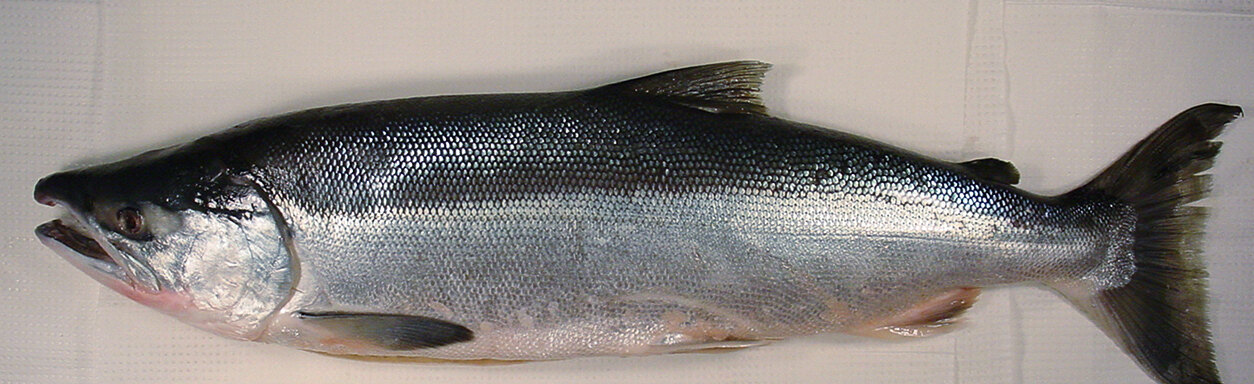
Sockeye salmon photo: U.S. FDA (public domain).